
"coffee tree yield"
4000 article(s) found

Basic knowledge of coffee Common sense of the definition of fine coffee 2
With regard to the cultivation of crops, seed selection is a very important factor. Every year, agronomists are studying higher quality and higher yield varieties of wheat, soybeans, and corn, as well as how to make apples more delicious, beautiful and resistant to diseases and insect pests. In fact, the same is true of coffee. The quality and taste of coffee are determined by the quality of the varieties. Coffee trees are generally divided into three categories in the industry: Arabica species

Coffee Seedling Technology: the production Management method of Coffee Seedling stage and the distance between Coffee planting plants
Professional coffee knowledge exchange more coffee bean information please follow the coffee workshop (Wechat official account cafe_style) coffee production capacity, usually using a conversion factor to convert the kilograms of berries picked from a coffee tree or a batch into the kilograms of raw beans. This conversion coefficient, also known as bean yield, should be calculated according to different coffee gene types. Elaraby
Coffee tree species are divided into three main categories: Arabica, Robersta and Liberica.
Villasarchi Velasacci is a hybrid of bourbon developed in the Costa Rican town of sarchi. The branches are at a 45-degree angle to the trunk and the leaves are bronze. Shade tree cultivation and minimal pesticide application make it an excellent organic coffee. Elegant acidity, delicate fruity flavors and nice sweetness. Caturra, Brazil, is a higher-yielding
Varieties of coffee beans
Several main coffee varieties and their characteristics are introduced here. Typica, also known as Tiberka Tibika, is the closest to the native species of Arabica, where almost all Arabica varieties originate. Widely cultivated in Central and South America in the past, the bean is long in shape and has excellent aroma and sour taste, but it is not resistant to leaf rust and requires quite a lot of shading trees to lead to production.
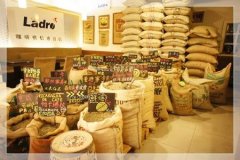
The cultivated varieties of Coffee Tree: small seed and large seed
3. Cultivated varieties (1) small seed species (2) large grain species Coffea belongs to Rubiaceae, Coffea belongs to perennial evergreen shrubs or small trees, there are about 90 species. At present, there are small seed species (Arabian species), medium grain species (Gaffra species) and large grain species (Liberian species) cultivated in Hainan. (1) small seed species: also known as Arabian species, native to Ethiopia, evergreen shrubs. The plant is small, 4cm high and 5m high

Introducing trees into coffee plantations can increase the yield of coffee beans.
Can you imagine a tree mixed with your coffee? This may not sound like a good idea, but a new study shows that mixed growth of trees and coffee shrubs can increase the number of birds and increase coffee production. One of the main risks for bean growers is the coffee bark beetle, an insect that drills into the coffee beans and lays eggs into them. Recently, in Jamaica

Increasing tree planting in coffee plantations can increase the yield of coffee beans
Can you imagine planting some trees in your coffee garden, which may sound surprising, but studies have shown that planting a certain number of trees in your coffee garden can increase the number of birds and increase coffee production. Many coffee plantation owners know that one of the main risks of coffee is the coffee bark beetle, an insect that drills into the coffee beans and puts the eggs

What is the annual yield of a coffee tree?
Arabica produces a rich oil that smells good and has a light, dark yellow oil that floats on the surface. Robusta produces more grease, but has a lot of foam and disappears quickly. Robusta contains twice as much caffeine as Arabica. Caffeine content: 2.2-2.4% and 1.1-1
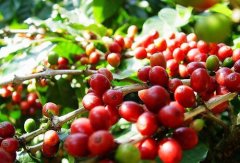
Reunion was once home to bourbon arabica coffee beans coffee country
Fine coffee beans must be excellent varieties, such as the original bourbon species, mocha species, tipica species, these species produce coffee beans with unique aroma and flavor, far from other species can compare, but the relative yield is lower, in recent years in pursuit of disease resistance and yield improvement, there have been many improved species, such as Kenya a large number of high-yield rural 11 species,

Two pictures of coffee family tree in Chinese and English to learn more about coffee variety system.
Coffee variety is one of the three elements of fine coffee variety, altitude and processing, among which coffee variety is one of the most important elements. Understanding coffee family tree is a necessary knowledge to learn fine coffee. In fact, there are hundreds of coffee tree species on the earth, nearly 100 in Arabica alone, but when it comes to fine coffee, only Arabica beans can be called.
Coffee beans and coffee trees varieties of coffee trees
After understanding the different types of coffee, let's take a look, especially the Arabica coffee that people are most concerned about can be divided into many different varieties.

How much coffee does a coffee tree produce?-the yield of a coffee tree.
How much coffee does a coffee tree produce? Arabica coffee is difficult to grow. They like mild days and colder nights. Too cold, too hot, and too humid weather can be fatal to it. Coffee trees in Arabica need to be planted on sloping slopes at high altitude. they grow luxuriantly in the highlands (600-1800 meters), and need special

Coffee trees are planted! Coffee Tree Killer: the chaos of Diseases and insect pests (pests)
Professional coffee knowledge exchange more coffee bean information Please pay attention to the coffee workshop (Wechat official account cafe_style) diseases and insect pests can destroy the growth of coffee, a serious epidemic may cause heavy economic losses to farmers, but do you know what pests and diseases are the biggest threat to coffee? How to identify these pests and diseases? What causes coffee disease or attracts pests? Coffee
Talking about "Arabica" again
Arabica is synonymous with high-quality coffee, accounting for more than 70% of the world's total output, but innocent farmers do not know how big the scope of "Arabica" is.
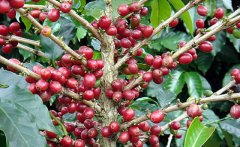
Guatemalan alpine coffee
Boutique coffee beans must be excellent varieties, such as the original bourbon species, mocha species and Tippica species. The coffee beans produced by these trees have unique aroma and flavor, which is far from that of other tree species, but the relative yield is low. in recent years, in order to pursue the ability of disease and insect resistance and increase the yield, there have been many improved tree species, such as the massive promotion of high-yield rurial11 species in Kenya.
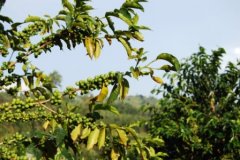
Manor Villa Donica, Panama
Boutique coffee beans must be excellent varieties, such as the original bourbon species, mocha species and Tippica species. The coffee beans produced by these trees have unique aroma and flavor, which is far from that of other tree species, but the relative yield is low. in recent years, in order to pursue the ability of disease and insect resistance and increase the yield, there have been many improved tree species, such as the massive promotion of high-yield rurial11 species in Kenya.

The yield of a tree in Robusta the characteristics of Arabica coffee beans
The characteristics of Arabica coffee beans produced by a tree in Robusta the manor introduces that "Arabica" coffee has a varied and broad potential flavor. Arabica coffee produced in different regions, different elevations and different climates usually has its own characteristics and can show a completely different flavor. Arabica coffee smells like grass when it is not roasted.
Vietnamese coffee Southeast Asian coffee beans
Boutique coffee beans must be excellent varieties, such as the original bourbon species, mocha species and Tippica species. The coffee beans produced by these trees have unique aroma and flavor, which is far from that of other tree species, but the relative yield is low. in recent years, in order to pursue the ability of disease and insect resistance and increase the yield, there have been many improved tree species, such as the massive promotion of high-yield rurial11 species in Kenya.
Introducing trees in coffee plantations can boost yields
Can you imagine a tree mixed with your coffee? It may sound like a bad idea, but a new study shows that growing trees mixed with coffee bushes increases bird populations and coffee production.
Papua New Guinea Coffee beans Fine Coffee
Boutique coffee beans must be excellent varieties, such as the original bourbon species, mocha species and Tippica species. The coffee beans produced by these trees have unique aroma and flavor, which is far from that of other tree species, but the relative yield is low. in recent years, in order to pursue the ability of disease and insect resistance and increase the yield, there have been many improved tree species, such as the massive promotion of high-yield rurial11 species in Kenya.